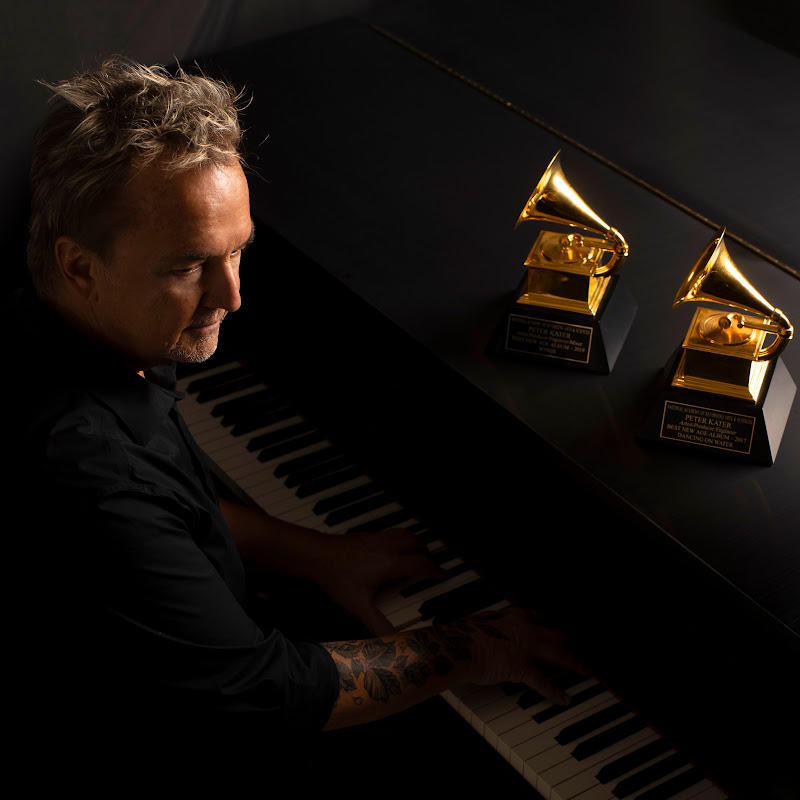
Peter Kater and R. Carlos Nakai, two Grammy-nominated musicians, perform a live concert in Asheville, North Carolina, blending Kater's acoustic piano with Nakai's Native American flute. The performance explores themes drawn from their albums "Earth" and "Surrender," creating an instrumental meditation on connection to the natural world and the letting-go that earth-based spirituality invites. This is pure sonic expression—no lyrics, no narrative structure—yet the interplay between the two instruments tells a complete musical story of dialogue, resonance, and shared space.
What is the context of this collaboration?
Peter Kater and R. Carlos Nakai are not casual collaborators. Between them, they hold 21 Grammy Award nominations, representing decades of work in New Age, instrumental, and contemplative music. Kater is known for his piano-based environmental and spiritual soundscapes; Nakai is one of the world's preeminent Native American flute players, bringing authentic indigenous musical traditions into contemporary concert settings. When these two artists share a stage, the performance becomes a dialogue between two distinct sonic traditions—Western classical/contemporary piano and indigenous North American wind music. The November 2014 concert in Asheville, North Carolina brought together an audience seeking live instrumental meditation, a growing category of conscious listening experiences.
How do piano and Native American flute create a musical conversation?
The strength of this performance lies in its fundamental asymmetry. The piano is a percussive, harmonic instrument—it can establish chords, rhythmic foundations, and forward motion. The Native American flute is monophonic (one note at a time) and breath-dependent; it lives in the human body's exhale, carrying overtones and microtonal variations that a piano cannot produce. When Kater and Nakai perform together, the piano does not dominate; instead, it creates a resonant bed upon which the flute floats, weaves, and sometimes leads. The flute moves with the freedom of the human voice; the piano anchors and supports without stepping on the melody.
This interplay mirrors a spiritual principle: not all instruments need to do the same thing. The flute's simplicity—its reliance on breath and the player's subtle control of air pressure—creates intimacy. The piano's sustained notes and complex harmonies provide architectual space for that intimacy to unfold. Neither dominates; both are necessary.
What does "Earth" represent in this musical context?
The album "Earth," from which some themes were drawn, suggests grounding, physicality, and connection to place. In the context of a live performance, "Earth" manifests in the sound itself. Both the piano and the flute produce vibrations that resonate through a physical body and a concert hall. The piano's strings vibrate; the flute's air column vibrates. The audience members feel these vibrations, not just hear them. This is embodied music—it asks the listener to be present not as a passive consumer but as a receiver of acoustic energy. The themes associated with "Earth" likely include slower tempos, deeper registers, and the kind of patience that comes from being rooted. There is no rush in earth-based music. There is only presence and the willingness to let sound unfold at its own pace.
What does "Surrender" mean as a musical theme?
Surrender, as presented in this concert, is not weakness or passivity. It is the letting-go that allows a musician to truly listen to their collaborator. When Kater plays a chord progression, Nakai must surrender his predetermined ideas about what the flute should do next and instead respond to what he hears in the piano. When Nakai plays a long, sustained note, Kater must surrender the urge to fill every space with harmonic richness and instead hold silence, letting the flute's note exist in its fullness. This mutual surrender creates elasticity in the music—moments where both instruments are absolutely aligned, and moments where one leads while the other follows. The music breathes. It is not a fight for dominance; it is a dance of taking turns and trusting the other musician's ear.
Surrender also invites a spiritual dimension. Many contemplative traditions teach that true peace comes from letting go of the need to control outcomes. In the context of a live, unrehearsed concert (or a concert with minimal rehearsal), surrender becomes a practice. Both musicians must trust the moment, trust their decades of training, and trust each other's musicianship. There is no safety net of a studio recording. There is only this moment, this sound, this breath.
How does the concert format shape the listening experience?
A live concert of instrumental music is fundamentally different from a recorded album heard in isolation. The audience is present in the room, part of an acoustic event. At the end of significant passages, the audience applauds—not to praise the musicians (though it does) but to acknowledge the shared space they have inhabited together. The applause is a form of collective breathing, a moment where the audience signals, "Yes, we were here. We heard that. We felt that." The musicians, in turn, are energized by this acknowledgment and often respond with intensified presence in the next passage.
Live performance also means imperfection and surprise. A recording can be edited; a concert cannot. If a musician enters a phrase slightly early or late, that becomes part of the sound-story. If the piano's sustain pedal creates an unexpected wash of harmonic color, that becomes the texture of that moment. This unpredictability is not a flaw in live music; it is the essence of it. It is what draws people away from their screens and into concert halls.
Why do so many listeners seek out instrumental, contemplative music?
Words can be limiting. Language parcels experience into categories, creates definitions, and sometimes obscures the very thing we are trying to understand. Instrumental music, by contrast, offers direct transmission. A listener hears a phrase on the flute and does not process it through the filter of a lyric; instead, the listener's own inner experience meets the sound and creates meaning. The meaning is not imposed from the outside but arises from within. This makes instrumental music particularly suited to contemplative practice—whether that is meditation, prayer, movement, or simply the act of being present.
Additionally, the human voice is everywhere in the modern world—podcasts, videos, notifications, conversations. The ears crave a break. Instrumental music, especially when it is played with the care and mastery evident in a Kater-Nakai performance, offers that break. It is music that trusts its listeners to bring their own intelligence, emotion, and presence to the experience. No explanation is needed. No message is delivered. Only sound, space, and silence.
What role does silence play in this kind of performance?
Silence in a concert is not the absence of sound; it is the presence of listening. When Kater lifts his hands from the piano, the silence that follows is not empty—it is full of the resonance of the note he just played, the anticipation of what Nakai might play next, and the audience's own heartbeat and breath. Skilled musicians understand that silence is an instrument. It is what gives notes meaning. A succession of notes without silence becomes noise; a sequence of notes and silences becomes music.
In contemplative music, silence is especially important. It is the space in which a listener's own inner experience can emerge. If the musicians fill every moment with sound, they are essentially saying, "Pay attention to me." If they leave space, they are saying, "Pay attention to what arises within you when you listen." This distinction is not small. It shapes the entire nature of the listening experience.
Where to go from here
Listeners interested in this performance can explore Peter Kater's discography, which includes numerous albums focused on nature and contemplative themes. R. Carlos Nakai's extensive catalog showcases not only his technical mastery of the Native American flute but also his commitment to bringing indigenous musical traditions into dialogue with contemporary and global influences. For those unable to attend live concerts, recorded albums by both artists are widely available; however, a live performance of this kind offers an immediacy and shared presence that a recording cannot replicate. Consider seeking out live instrumental performances in your area—whether featuring these artists or others working in similar contemplative genres. The practice of sitting in a room with musicians, feeling their sound vibrate through the air and through your body, and allowing your own inner experience to unfold without distraction or explanation is increasingly rare in the modern world. It is also increasingly necessary.