The Liberation of the Mind: A Journey Beyond Illusion
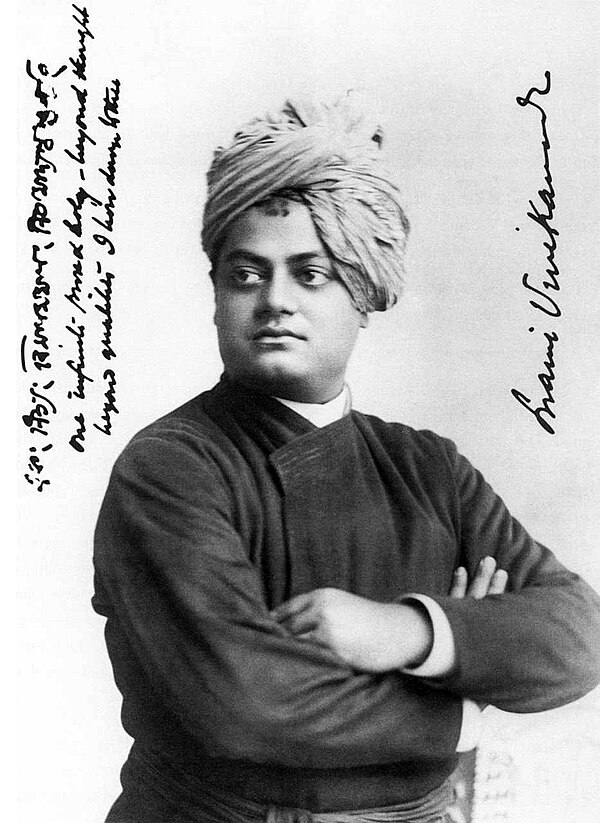
Swami Vivekananda's assertion that "Bondage is of the mind; freedom too is of the mind" invites us to explore the profound relationship between our mental constructs and our experience of reality. This statement underscores the idea that our perceptions and beliefs shape our understanding of both limitation and liberation. In a world often dominated by external circumstances, recognizing that our true freedom lies within the confines of our own thoughts is a transformative realization. It compels us to examine how we can cultivate a mindset that fosters liberation rather than entrapment.
Delving deeper, Vivekananda's words challenge us to confront the very nature of our bondage. It suggests that the chains we feel are often self-imposed, arising from fear, ignorance, or societal conditioning. By understanding that freedom is equally a mental construct, we are empowered to shift our perspective and embrace a more expansive view of existence. This duality of bondage and freedom invites a contemplative inquiry into the nature of our thoughts and the beliefs that govern our lives.
The image / the metaphor
The imagery in Vivekananda's quote evokes a powerful dichotomy between bondage and freedom, both of which reside in the realm of the mind. The term "bondage" conjures feelings of restriction, confinement, and helplessness, while "freedom" suggests liberation, expansiveness, and potential. The verbs "is" and "too" imply a direct equivalence, indicating that both states are not merely external conditions but rather internal realities shaped by our mental landscape. This understanding invites us to explore how our thoughts can either imprison us or set us free.
In the speaker's tradition
Swami Vivekananda's insights are deeply rooted in the rich philosophical tradition of Hinduism, particularly in the context of Advaita Vedanta, which emphasizes the non-duality of existence. Concepts such as dharma, the moral order of the universe, and prajna, or wisdom, play a crucial role in understanding how our mental constructs influence our experience of reality. In this framework, bondage arises from ignorance (avidya) of our true nature, while freedom is attained through self-realization and the understanding of our interconnectedness with the universe.
In his work "Jnana Yoga," Vivekananda elaborates on the path of knowledge as a means to transcend the illusions of the mind. He draws upon the teachings of the Upanishads, which articulate the idea that the ultimate reality (Brahman) is beyond the dualities of bondage and freedom. By recognizing our true essence as part of this universal consciousness, we can dissolve the mental barriers that confine us, leading to a profound sense of liberation and peace.
Living the teaching
Consider a modern scenario where an individual feels trapped in a job that offers little fulfillment. This person may believe that their circumstances dictate their happiness, leading to a sense of bondage. However, by applying Vivekananda's teaching, they can begin to shift their mindset, recognizing that their freedom lies in their ability to choose how they respond to their situation. This realization may inspire them to seek new opportunities, pursue passions, or even cultivate gratitude for the lessons learned in their current role, ultimately transforming their experience from one of entrapment to one of empowerment.
In the realm of relationships, the teaching can manifest in moments of conflict or misunderstanding. When faced with a disagreement, individuals often feel trapped by their emotions, believing that their happiness is contingent upon the other person's actions. By embracing the idea that both bondage and freedom are of the mind, one can cultivate a sense of inner peace, recognizing that their emotional state is not solely dependent on external circumstances. This shift allows for more compassionate communication and a deeper understanding of the interconnectedness of all beings, fostering healthier relationships.
A reflection
As we contemplate Swami Vivekananda's profound insight, we are invited to reflect on the nature of our own minds. What beliefs or thoughts are we holding onto that may be creating a sense of bondage in our lives? In what ways can we cultivate a mindset that embraces freedom, allowing us to transcend our limitations and experience the fullness of our potential? This inquiry not only deepens our understanding of Vivekananda's teaching but also serves as a catalyst for personal transformation.



Join the BrightStar Community
Stay connected with daily inspiration, event announcements, and community wisdom