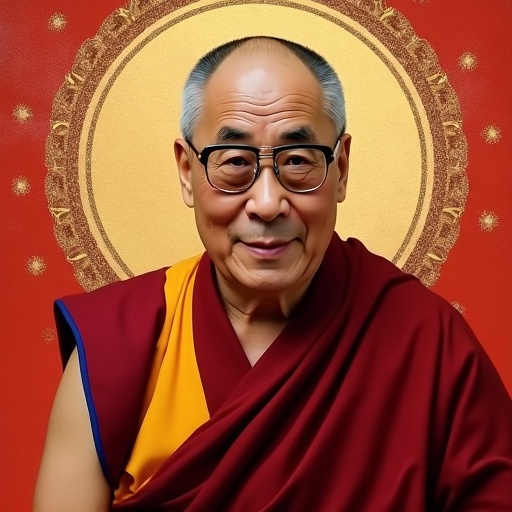
TLDR: The Dalai Lama holds unique significance in Tibetan Buddhism and global consciousness as both a spiritual authority and political figure. His teachings emphasize universal compassion, the cultivation of inner peace as a foundation for world peace, and a pragmatic approach to human suffering rooted in Buddhist philosophy. His influence extends far beyond religious circles, shaping contemporary discussions on ethics, mental health, and cross-cultural dialogue.
Who Is the Dalai Lama and What Does He Represent?
The Dalai Lama is not simply a religious figure—he is the spiritual leader of Tibetan Buddhism and carries historical weight as both a monastic authority and a symbol of Tibetan cultural resistance. The title "Dalai Lama" (meaning "Ocean of Wisdom" in Mongolian and Tibetan) has been held by a succession of incarnate lamas since the 16th century, with each incarnation believed to be a reincarnation of his predecessor. The current Dalai Lama, the 14th, was born in 1935 and assumed spiritual and political leadership of Tibet during childhood.
The position itself bridges the spiritual and temporal—historically, the Dalai Lama served as both the religious head of Tibetan Buddhism and the political ruler of the Tibetan plateau until the Chinese occupation of Tibet in 1950. This dual role has made the Dalai Lama a figure of profound spiritual significance while simultaneously placing him at the center of geopolitical controversy and human rights discussions.
What Are the Core Teachings of the Dalai Lama?
The Dalai Lama's philosophical framework rests on several Buddhist principles adapted for contemporary audiences:
- Universal Compassion: The cornerstone of his teaching is that compassion is not limited to a specific group or belief system but extends to all sentient beings. This compassion is understood not as sentimentality but as a rational response to the interconnectedness of human suffering and flourishing.
- Inner Peace as a Prerequisite for World Peace: The Dalai Lama emphasizes that external peace movements fail without internal transformation. Individual practitioners must cultivate mental calm and emotional stability as the foundation for meaningful action in the world.
- Secular Ethics: In his later decades, the Dalai Lama has articulated a vision of ethics that does not depend on religious belief, making his teachings accessible to secular audiences. This approach acknowledges that whether one is religious or not, the pursuit of happiness and the reduction of suffering are shared human concerns.
- Dialogue Across Traditions: Rather than asserting Buddhist superiority, the Dalai Lama has consistently engaged with other religious leaders and scientists, viewing dialogue as a path to mutual understanding and shared truth-seeking.
How Does Buddhist Philosophy Address Human Suffering?
At the heart of the Dalai Lama's teaching is the Buddhist analysis of suffering (dukkha), which goes beyond the Western understanding of pain. Buddhist philosophy identifies suffering not merely as negative experiences but as a structural condition of unenlightened existence—the dissatisfaction that arises from craving, aversion, and misunderstanding the nature of self.
The Dalai Lama teaches that most human distress originates in the mind rather than in external circumstances. This is not to say that external problems (poverty, injustice, illness) do not matter—rather, it is to recognize that our psychological relationship to circumstances determines our actual experience. Two people in identical situations may experience radically different levels of well-being based on their mental training and perception.
The path forward, according to this tradition, involves both personal practice (meditation, ethical discipline, philosophical study) and engaged compassion in the world. The goal is not escapism or withdrawal but a clarity of mind that allows one to act effectively and with genuine concern for others' welfare.
What Role Does Meditation Play in the Dalai Lama's Framework?
Meditation is presented not as a luxury or wellness trend but as a systematic method for training the mind. The Dalai Lama discusses meditation as a practical technology for reshaping mental patterns, reducing reactivity, and cultivating insight. Different meditation practices target different mental capacities: calming practice (shamatha) develops focus and stability; analytical meditation develops discernment; loving-kindness practice cultivates compassion directed outward.
The Dalai Lama has been particularly interested in the intersection of Buddhist contemplative practice and modern neuroscience, supporting research that demonstrates how meditation physically alters brain structure and function. This scientific validation makes meditation accessible to people who might be skeptical of its spiritual framing.
How Does the Dalai Lama Address Geopolitical Conflict?
The Dalai Lama's position on Tibet and China represents a practical application of his compassion teaching. Despite significant personal and political provocation, he has consistently advocated for non-violent dialogue rather than armed resistance. This stance is rooted in both pragmatism (violence would cause more suffering) and principle (retaliatory violence contradicts the very compassion that motivates the struggle).
He has also expressed willingness to negotiate and has at various points suggested that Tibet might accept genuine autonomy within the Chinese political framework rather than pursuing independence—a flexible approach that some supporters found controversial but which reflects his emphasis on practical solutions over ideological purity.
In global conflicts more broadly, the Dalai Lama has called for disarmament, the strengthening of international institutions, and education in compassion and ethics as long-term preventatives of war. He frames peace not as the absence of disagreement but as the presence of skillful, non-violent engagement with difference.
What Is the Dalai Lama's Perspective on Science and Religion?
One distinctive aspect of the Dalai Lama's teaching is his receptiveness to scientific inquiry. Rather than viewing science and Buddhism as competitors, he has positioned them as complementary: science investigates the external world and measurable phenomena; Buddhism investigates the nature of mind and consciousness. Where they overlap—as in neuroscience's study of meditation—he welcomes dialogue and revision of Buddhist understanding if evidence warrants it.
This openness has led to collaboration with neuroscientists studying long-term meditators, conversations with physicists about quantum mechanics and Buddhist philosophy, and engagement with psychologists on mental health and trauma. The Dalai Lama has stated that if scientific evidence contradicted Buddhist teachings, Buddhism would need to change—a humility that contrasts with more dogmatic religious institutions.
How Do Secular Audiences Connect with the Dalai Lama's Ideas?
The Dalai Lama's emphasis on secular ethics has made his teachings relevant to people who do not identify as Buddhist or religious. His argument is straightforward: regardless of one's metaphysical beliefs, the pursuit of happiness is universal, and compassion is a rational strategy for achieving it. Self-interest and altruism are not opposed; genuine concern for others' welfare naturally contributes to one's own well-being.
This framing has made him influential in conversations about education reform, business ethics, and mental health. Schools have adopted his secular ethics curriculum; corporations have invited him to speak on leadership; therapists have integrated Buddhist-influenced contemplative practices into clinical work—all without requiring participants to adopt Buddhist beliefs.
What Critiques Exist Around the Dalai Lama's Leadership?
While the Dalai Lama is widely revered, his leadership has faced criticism from various quarters. Some Tibetan activists argue that his non-violent stance has allowed China to consolidate control without sufficient international pressure. Some Western Buddhist practitioners have critiqued his maintenance of hierarchical monastic structures and his historically conservative positions on gender equality and LGBTQ+ inclusion (though he has evolved on these issues in recent years). Political opponents in China and elsewhere portray him as a separatist or geopolitical pawn. These critiques deserve serious consideration as part of a complete picture of his influence.
Where to Go From Here
For those interested in exploring the Dalai Lama's ideas further: begin with his secular ethics writings and talks, which are most accessible to those unfamiliar with Buddhist terminology. Engage with his dialogues with scientists and other religious leaders to see his thought in dialogue with other frameworks. If drawn to the contemplative dimension, explore basic meditation instruction from teachers trained in the tradition he represents. Consider the tension between his spiritual emphasis on inner transformation and the demands of social justice—this is not a contradiction to resolve but a creative tension to hold.


