Manifesting the Divine Within
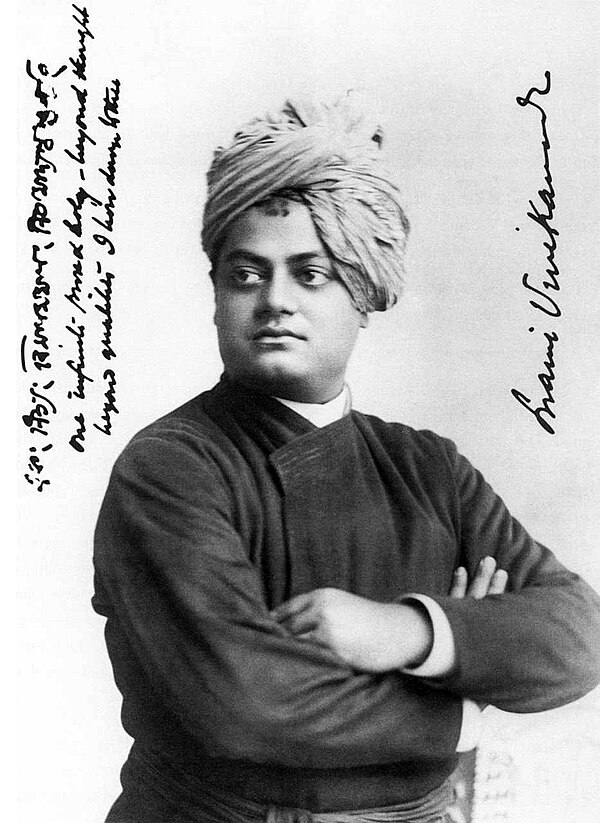
Swami Vivekananda's assertion that "Every action that helps us to manifest our divine nature more and more is good; every action that retards it is evil" invites us to reflect deeply on the nature of our actions and their alignment with our higher selves. This quote encapsulates a profound ethical framework, urging us to evaluate our choices through the lens of spiritual growth and self-realization. The stakes are high: our actions not only shape our personal destinies but also influence the collective consciousness of humanity.
In a world often driven by material pursuits and transient desires, Vivekananda's words serve as a clarion call to reconnect with our inherent divinity. The dichotomy he presents—between actions that elevate us and those that diminish us—challenges us to cultivate awareness in our daily lives. This awareness is not merely an intellectual exercise; it is a transformative practice that can lead us toward a more meaningful existence, one that resonates with our true nature.
The image / the metaphor
The imagery in Vivekananda's quote is striking in its simplicity yet profound in its implications. The verbs "manifest" and "retard" evoke a sense of dynamic movement, suggesting that our spiritual journey is not static but rather a continuous unfolding. To manifest our divine nature implies an active engagement with our inner selves, a process of bringing forth the latent qualities of love, compassion, and wisdom that reside within us. Conversely, the notion of retarding suggests stagnation, a pulling back from our potential, which can lead to a sense of disconnection and suffering.
Diving deeper into this metaphor, we can envision our divine nature as a seed that requires nurturing to grow. Each action that aligns with our higher self acts as sunlight and water, fostering growth and vitality. In contrast, actions that detract from this growth can be likened to weeds that choke the life out of the seed. This vivid imagery compels us to consider the quality of our actions and their impact on our spiritual evolution.
In the speaker's tradition
Swami Vivekananda's teachings are deeply rooted in the Hindu tradition, particularly in the concepts of dharma and the pursuit of self-realization. Dharma, often translated as "righteous duty," emphasizes the importance of aligning our actions with our true nature and the greater good. In this context, Vivekananda's quote can be seen as a call to live in accordance with our dharma, recognizing that our actions have the power to either elevate or diminish our spiritual essence.
Moreover, the idea of manifesting our divine nature resonates with the concept of kenosis, or self-emptying, found in various spiritual traditions. This process involves letting go of ego-driven desires and opening ourselves to a higher purpose. In the Bhagavad Gita, a foundational text in Hindu philosophy, Krishna encourages Arjuna to act selflessly and in alignment with his true nature, reinforcing the notion that our actions should be guided by a deeper understanding of our divine essence.
Living the teaching
Consider a modern scenario where this teaching can be applied: a workplace environment filled with competition and stress. In such a setting, one might feel compelled to engage in actions that prioritize personal gain over collaboration and integrity. However, by consciously choosing to act in ways that uplift both oneself and others—such as offering support to a colleague or sharing credit for a team success—one can manifest their divine nature. This shift not only enhances personal fulfillment but also fosters a more harmonious workplace culture.
In the realm of personal relationships, the application of Vivekananda's teaching becomes equally poignant. Imagine a moment of conflict with a loved one, where the temptation to react defensively arises. By pausing to reflect on how one's response can either elevate the relationship or create further discord, one can choose to respond with compassion and understanding. This conscious choice to act in alignment with one's higher self not only transforms the immediate situation but also deepens the bond between individuals, illustrating the profound impact of living in accordance with our divine nature.
A reflection
As we contemplate Swami Vivekananda's insightful words, we are invited to engage in a reflective practice that asks us to consider: "In what ways do my daily actions either manifest or hinder my divine nature?" This question serves as a guiding light, encouraging us to examine our choices and their alignment with our spiritual aspirations. By fostering this awareness, we can begin to navigate our lives with intention, ultimately contributing to our own growth and the upliftment of those around us.