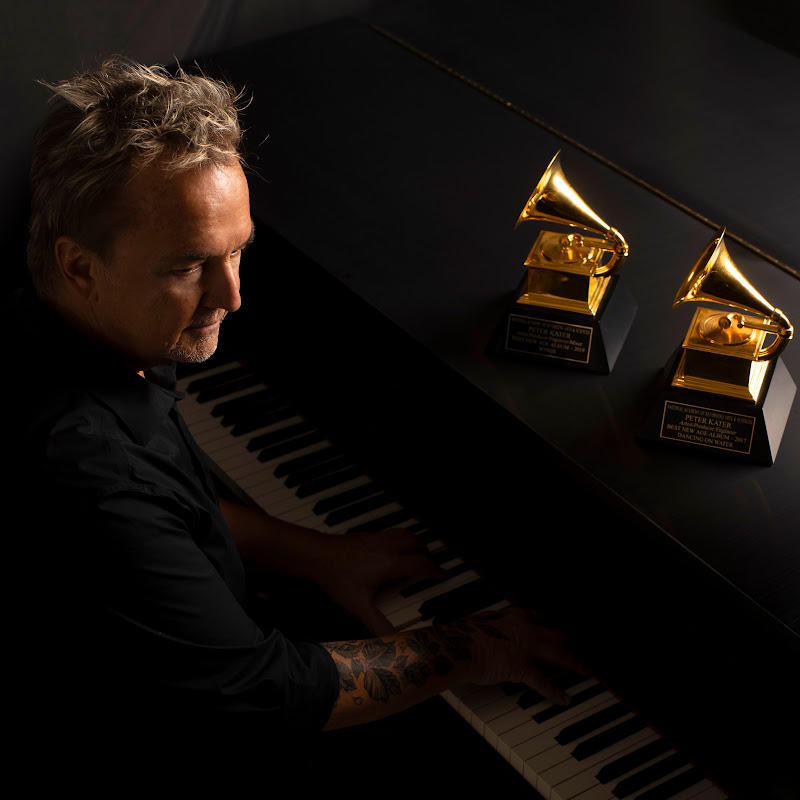
"Lotus Moon" is a contemporary instrumental composition featuring piano (by Peter Kater) and cello (by Tina Guo), released as part of the album Inner Passion. The piece uses acoustic instrumentation to evoke themes of spiritual awakening, inner growth, and the metaphorical journey represented by the lotus flower—a symbol of emergence from darkness into light. This collaboration represents a meeting point between Western classical composition and contemplative soundscapes designed to support meditation and conscious listening.
What is the significance of the lotus metaphor in spiritual music?
The lotus flower carries profound symbolic weight across Eastern spiritual traditions. In Buddhism and Hinduism, the lotus represents spiritual awakening and enlightenment because it grows from murky water yet blooms pristine and untouched. "Lotus Moon" borrows this archetypal imagery to frame the listening experience as a journey of inner transformation. The moon, paired with the lotus, adds temporal dimension—suggesting cycles, reflection, and the illumination that comes from turning inward. Together, these symbols suggest a musical landscape where the listener encounters both the struggle of growth and the beauty of emergence.
How do piano and cello create a dialogue in instrumental composition?
The pairing of piano and cello is a classical choice with deep historical roots, yet it remains fresh in contemporary music. The piano provides harmonic structure and rhythmic grounding—its range spans both melody and accompaniment. The cello, with its warm, singing voice close to the human vocal register, carries emotional weight and melodic flow. In "Lotus Moon," this instrumentation allows for musical conversation: the piano might establish atmosphere while the cello voice rises above it, creating tension and release. This back-and-forth mirrors dialogue itself—between different aspects of consciousness, between effort and surrender, between the mind's structure and the heart's expression.
What role does acoustic instrumentation play in contemplative music?
Acoustic instruments—unplugged, unmediated by electronic processing—carry a directness that synthesizers and digital instruments cannot replicate. A cello's sound is produced by the bow meeting string; the overtones and subtle variations are present in real time. A piano's sound decays naturally, following acoustic laws of physics. This physicality creates what some listeners experience as authenticity or presence. In the context of music designed for meditation or inner work, this acoustic quality matters: it grounds the listener in the natural world rather than abstract electronic space. The slight imperfections, the breath-like qualities of the cello, the resonance of the piano—these become invitations to attentiveness rather than distractions.
What is the "Inner Passion" album and its artistic vision?
The Inner Passion album represents a collaboration between Peter Kater, an accomplished composer known for meditative and world-music-influenced instrumental works, and Tina Guo, a virtuoso cellist whose repertoire spans classical, contemporary, and world-music idioms. Together, they've created a collection of pieces designed to explore the relationship between external musical expression and internal emotional and spiritual experience. "Lotus Moon" is one offering within this larger vision—a piece that doesn't aim to entertain in a passive sense, but rather to activate and support the listener's own inner process. The album invites listeners to discover what emerges when the mind becomes still enough to meet music halfway.
How can instrumental music support meditation and inner work?
Music without lyrics sidesteps the rational mind's tendency to parse language and meaning; this creates space for direct, non-conceptual experience. A well-composed piece like "Lotus Moon" can serve as an anchor for attention—the listener focuses on timbre, melody, harmony, and rhythm rather than thoughts or worries. The emotional and energetic content of the music can support specific inner states: a piece that builds and releases tension mirrors the natural oscillations of the nervous system, potentially helping listeners access deeper relaxation or clarity. Some practitioners use instrumental music as a gateway to states of mind conducive to meditation, visualization, or simply being present with what is. The absence of words means each listener projects their own meaning, making the experience highly personal.
Why does the collaboration between piano and cello matter for spiritual music?
Peter Kater and Tina Guo bring distinct lineages and sensibilities to their collaboration. Kater's background in meditative composition and world-music fusion means he understands how to build sonic spaces that support inner work. Guo's classical training and virtuosity ensure technical excellence while her openness to contemporary and non-Western musical forms allows her to transcend purely classical language. When artists with different backgrounds collaborate on music designed to touch the spirit, the result often contains more dimensions than either could offer alone. The piano-cello pairing, therefore, becomes more than an instrumental choice—it's a creative partnership that models the very themes the music might explore: unity within diversity, dialogue, and the beauty of complementary forces working together.
Where to go from here
If "Lotus Moon" resonates with you, consider exploring the full Inner Passion album to experience how these artists develop their themes across multiple pieces. Peter Kater's other works in the contemplative instrumental genre offer similar invitations to turn attention inward. Tina Guo's recordings with world musicians show how the cello can bridge classical tradition with contemporary and global soundscapes. You might also deepen your listening by sitting with "Lotus Moon" in a quiet space, without distraction, and noticing what arises—not judging the experience as good or bad, but simply observing how the music meets your own inner landscape. The piece is an offering; what you discover is uniquely yours.